
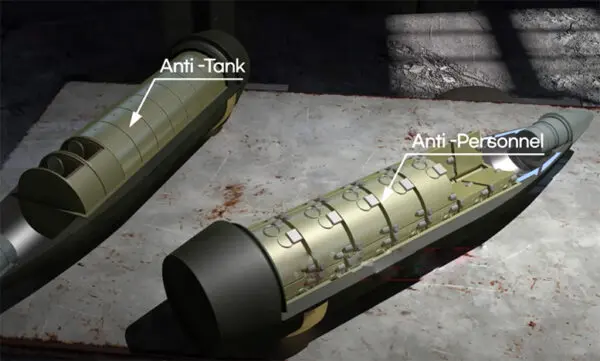
Mining standards for M692, M731 projectiles
Mining standardse
Standards for the density of area mining with cargo artillery projectiles
Standards for the density of area mining with cargo artillery projectiles such as M692are determined by the mining mission and military doctrine. Density depends on the type of mines, the nature of the target and the operational need. The general standards are given below:
| Type of mining | Type of mines | Density (mines/m²) |
|---|---|---|
| Anti-personnel mining | Anti-personnel (AP) | 0,2–0,5 mines/m² |
| Anti-tank mining | Anti-tank (AT) | 0,05–0,2 mines/m² |
| Combined mining | AP + AT | 0,1–0,3 mines/m² |
2. Density for specific targets
- Communication hubs: 0.3–0.5 mines/m² (dense mining to block routes).
- Defensive positions: 0.1–0.3 mines/m² (optimal for impeding the movement of infantry and vehicles).
- Open terrain: 0.05–0.2 mines/m² (minimum density to slow the enemy's advance).
3. Recommendations for M692 projectiles
- Standard mining:
- Area of one projectile: 200–400 m².
- Density: 0,1–0,2 mines/m².
- One projectile covers an area of: 36 mines.
- Dense mining:
- Density: 0,3–0,5 mines/m².
- One projectile covers an area of: 72–120 m².
4. Example calculation for tasks
Task:
Mining an area of 10,000 m² with a density of 0.3 mines/m².
Calculation:
- Number of mines:
Nmines = S × ρ = 10,000 × 0.3 = 3,000 mines. - Number of projectiles:
Nprojectiles = Nmines ÷ 36 = 3,000 ÷ 36 ≈ 84 projectiles.
Calculating the number of remote mines to mine a given area
Projectile M692 is designed for remote mining of territory. It contains 36 mines (anti-personnel or anti-tank), and the area covered by one projectile is 200–400 m².
1. Calculation formula
To determine the required number of mines and projectiles:
- Number of mines:
Nmines = S ÷ A1 projectile - Number of projectiles:
Nprojectiles = Nmines ÷ 36
Where:
S— the total mining area (m²).A1 projectile— the area covered by one projectile (m²).Nmines— the required number of mines.
2. Example calculation
Task:
Mining an area of 10,000 m² with an average density of 0.3 mines/m².
Calculation:
- Number of mines:
Nmines = 10,000 × 0.3 = 3,000 mines - Number of projectiles:
Nprojectiles = 3,000 ÷ 36 ≈ 84 projectiles
3. Additional adjustment factors
- The height of the projectile's detonation (determined by the fuze).
- Mining density depending on the task.
- Type of mines (anti-personnel, anti-tank or combined).
Also on this site
- Remote-mining projectiles — all pages of the section
- M718, M741 (RAAM) projectiles
- M692, M731 (ADAM) projectiles
- RAAM and ADAM mining systems
- Cargo projectiles — all pages of the section
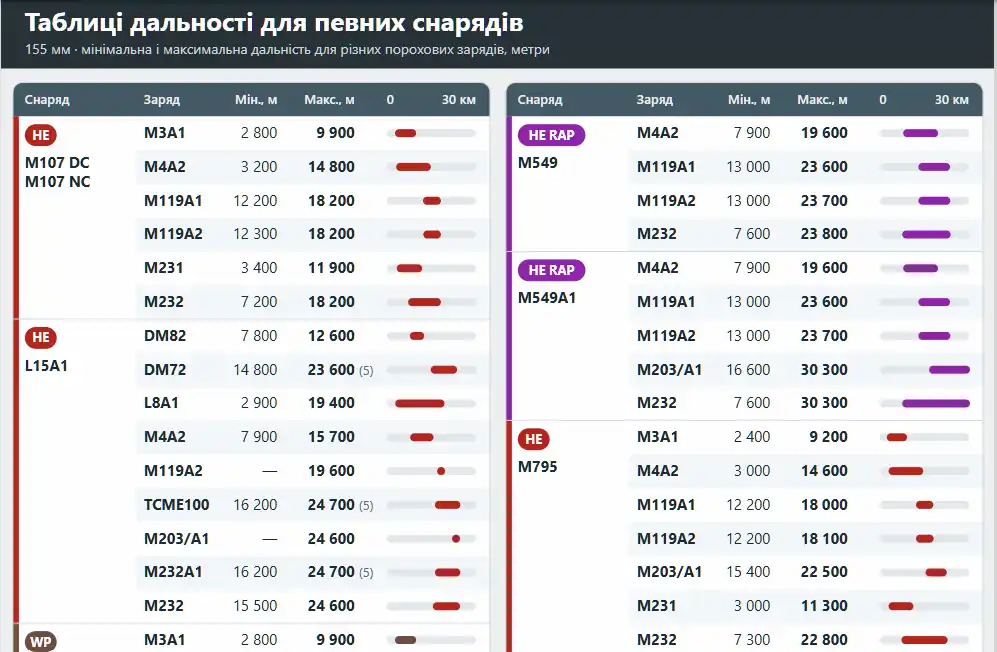
- Range tables for specific projectiles
- Cognitive information — all articles of the section
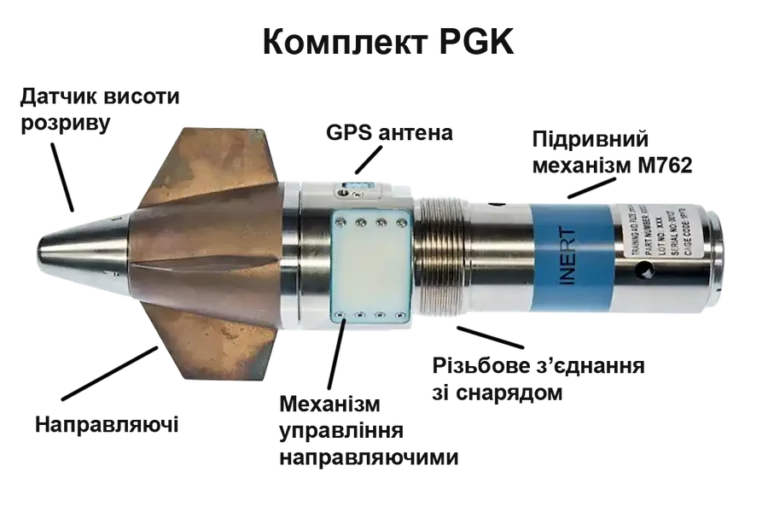
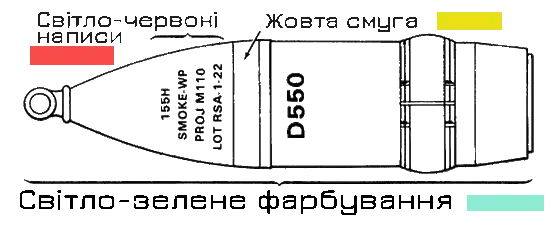
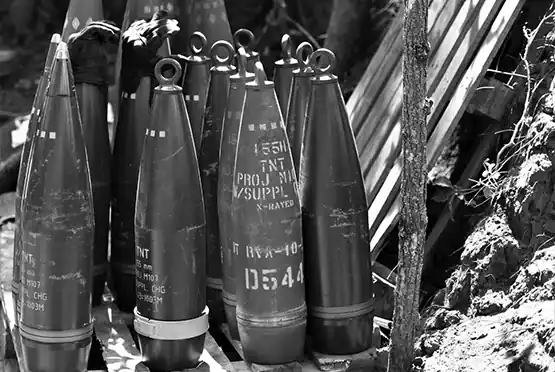
Markings and inscriptions on projectiles
A–3 – an American explosive consisting of a mixture of 91% RDX and 9% plasticizing oil, also known as microcrystalline wax;
Orienting a 64-00 mils panoramic sight with the ПАБ-2М aiming circle
1. The preliminary setup and orientation of the PAB-2M aiming circle is no different from the usual one. We end up with the aiming circle pointed in the main direction of fire (MDF) and the angle-measuring (red) scales zeroed.
How to enter the correction when firing illuminating projectiles
During night combat operations, artillery units, in addition to fire missions to engage targets, perform the following tasks:
Oleh Syrota (Georgich©) for the Armed Forces of Ukraine /
Share your experience of working with 155 mm ammunition.
Send comments and suggestions by email: entropiaw@gmail.com
